



Brooklyn neighborhoods rarely stop and start as neatly as the map suggests. Search the same address on different sites and you can get different neighborhood names depending on where you look. Some of the most interesting parts of the borough are the edges, where one neighborhood gives way to another and the transition ends up being part of the appeal.
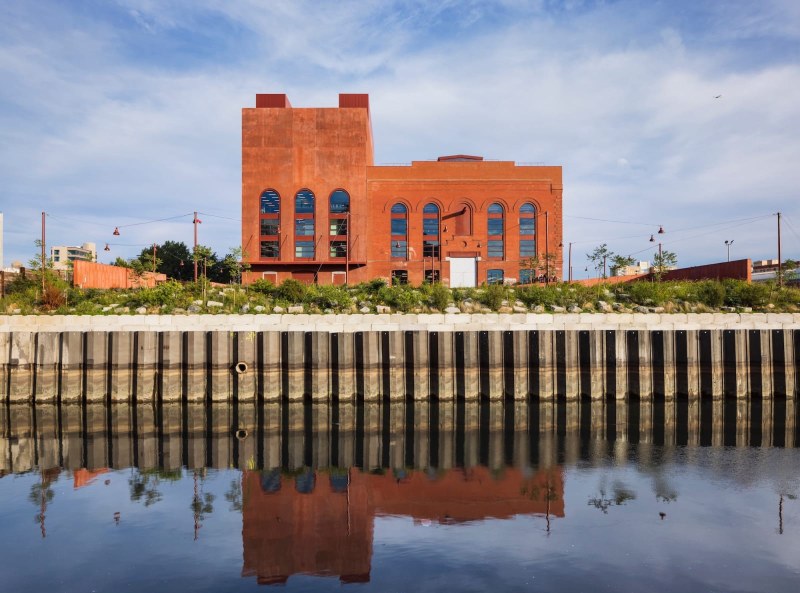
One of the most interesting neighborhood handoffs in Brooklyn happens at Bridge Street, where DUMBO gives way to Vinegar Hill. The two share the waterfront, old industrial buildings, and Belgian-block streets, but they do not feel the same once you cross over. DUMBO is more closely tied to the industrial waterfront and later loft conversion story, while Vinegar Hill is older and more residential, with early- and mid-19th-century houses and a preserved street pattern that sets it apart. DUMBO has more restaurants, more waterfront activity, and a level of tourist foot traffic that makes crossing into Vinegar Hill feel like a more dramatic shift than the distance suggests. Cross over and it gets quieter quickly, with Hudson Avenue feeling more tucked in. Even the name points to a separate history, tied to the 1798 Battle of Vinegar Hill in Ireland.
The line between Fort Greene and Downtown Brooklyn is less a border than a seam. Around Flatbush, Lafayette, and Ashland, brownstone Brooklyn runs directly into a subway hub, BAM, and the stores and infrastructure of a proper downtown. Fort Greene never really lost its residential identity even as Downtown Brooklyn grew significantly over the last decade with new towers, Atlantic Terminal, and City Point. Fort Greene Park anchors the neighborhood side of things, and BAM, on Lafayette Street since 1859, is as much a part of the blocks as anything else. You can be on a quiet tree lined street and two minutes later be at one of the biggest transit hubs in Brooklyn. That kind of range in a small area is not something every neighborhood has.
The boundary between Park Slope and Windsor Terrace is one of those Brooklyn lines people feel more than they can point to on a map. Technically it happens around Bartel-Pritchard Square, the traffic circle at Prospect Park West and 15th Street, where the two neighborhoods meet at the park’s southwest entrance. Park Slope has the brownstones, the density, and the commercial corridors on Seventh and Fifth Avenues. Windsor Terrace is smaller, quieter, and more brick than brownstone, with a residential character that has stayed consistent since it developed as a working and middle class enclave in the late 19th century. It was heavily Irish Catholic for generations, a history still visible at Farrell’s Bar, open since 1933. Bordered by Prospect Park on one side and Green-Wood Cemetery on the other, Windsor Terrace has an unusually contained, almost village-like quality. People who move there from Park Slope often say they didn’t realize it was its own neighborhood until they were already living in it.
The line between Bushwick and Ridgewood is one of the more genuinely confusing borders in Brooklyn, partly because it is not actually a Brooklyn border at all. Wyckoff Avenue runs down the middle of what feels like one continuous neighborhood, but one side is Brooklyn and the other is Queens. The boundary has been disputed since the 17th century, when Dutch settlers in Bushwick and British settlers in what became Ridgewood fought over the line for decades. A large boulder called Arbitration Rock was placed in 1769 to settle it and still sits today at the Onderdonk House in Ridgewood. The physical difference is real though. Bushwick has the street art, the converted warehouses, and the energy of a neighborhood that has changed significantly over the last 20 years. Ridgewood is quieter and more residential, with orderly blocks of brick rowhouses built mostly between 1905 and 1925 that give it an architectural consistency you don’t find in many neighborhoods.
Brooklyn’s neighborhood lines have never quite matched the way the borough actually feels. The edges are where the borough gets interesting, and if you spend enough time in them you start to wonder why the lines were drawn where they were in the first place.
Jackie Rossiter and Debbie Zolan of The Zolan Rossiter Team at Compass understand the nuances of a changing market. From pinpoint pricing to high-impact marketing, they help sellers and buyers, tenants and landlords navigate what’s next, without pressure, just perspective.
Contact The Zolan Rossiter Team today for a personalized home evaluation or to explore your options.